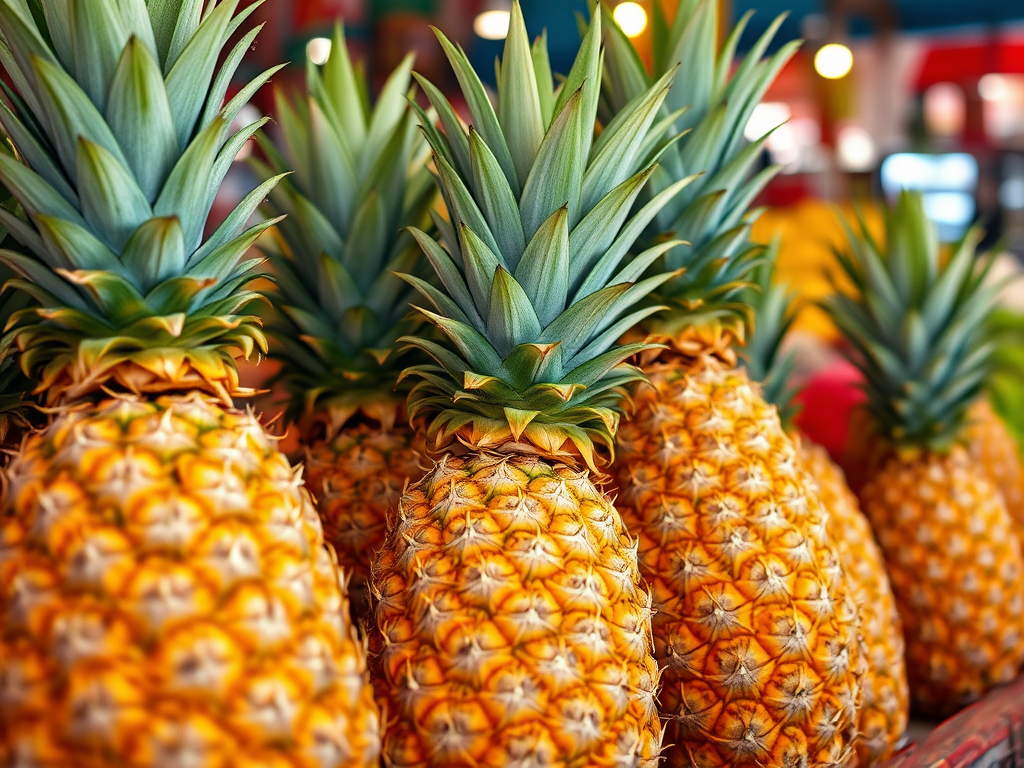
China suspends imports of pineapples from Taiwan in March 2021
Context
On February 26, 2021, the Chinese government announced that it would suspend imports of pineapples from Taiwan beginning March 1, 2021. Beijing justified this ban through reference to “harmful creatures” having infested the products that posed a threat to China’s own produce. Chinese state media reporting from February 26 cited Ma Xiaoguang, spokesperson for the State Council’s Taiwan Affairs Office, as saying that “[s]ince 2020, customs of the mainland have in various instances found pests in pineapples imported from Taiwan, which would have posed a serious threat to the mainland’s agriculture and ecological security had they not been intercepted” and also cited Ma as saying that “[t]he temporary ban is a scientific biosecurity measure and is in line with the mainland’s laws, regulations and standards” (not direct quotes).
This measure was viewed by Taiwan as politically motivated related to the ongoing cross-straits dispute over the political status of Taiwan. Reporting of this measure noted that it was activated at a similar time as military drills were carried out in the Taiwan’s Air Defense Identification Zone. And a press release from the Taiwanese authorities citing Premier Su Tseng-chang refuted China’s claims by stating that “[w]hile Japan’s quarantine inspections are among the most stringent worldwide, Taiwan pineapples have always passed the inspections, proving the products are indeed of the most outstanding quality”.
Impact
In 2020, Taiwan exported around 46,000 tonnes of pineapples, with around 90% of these (or 41,000 tonnes, worth approximately US$52.64 million) exports being sent to China. According to a press release from Taiwanese authorities, prior to the introduction of this measure approximately 10% of Taiwan’s pineapples were exported, with the remaining 90% consumed domestically.
Responses
i) Taiwanese government and industry responses.
In March 2021 a spokesperson for authorities in Taiwan told US press that they believe the measure “does not comply with international trade rules”. Taiwan’s response to this measure entailed two main aspects. First, on February 28 (two days after the announcement of the measure), authorities in Taiwan announced US$35.3 million in subsidies for pineapple farmers to maintain pineapple prices at the average market value of the preceding two years.
Second, pineapples were promoted, both locally and internationally, as Taiwan sought to promote its pineapple products to alternative buyers. Domestic campaigns were promoted to support local purchases of pineapples, such as a “All You can Eat Taiwanese Pineapple Challenge”. A national agricultural product team was established in response to this measure with an explicit trade diversification brief for pineapples and other agricultural products, and Taiwan’s Council of Agriculture was also asked to establish alternative overseas markets. The “freedom pineapples” slogan was promoted both within Taiwan and internationally. This explicitly sought to model Australian strategy, with Taiwan’s foreign minister, Joseph Wu, Tweeting that “Our pineapples are now banned by #China to punish farmers in the south. Remember #Australia’s #FreedomWine? I urge like-minded friends around the globe to stand with #Taiwan & rally behind the #FreedomPineapple.”
An example of this came in March 2021, when the Taiwan-Australia Agricultural Cooperation Implementation agreement was signed, which sought to establish a new export market for Taiwan’s pineapples in Australia. Taiwan committed to removing the crown buds of pineapples prior to export to Australia, following a new method established in 2020 allowing this to take place without the fruit rotting en-route. The pineapples would also be fumigated for similar reasons. Initially, this new market in Australia constituted a single shipment of six tonnes, and limited amounts of exports sent via air. Australia’s largest domestic pineapple producer expressed doubts about the arrangement, citing biosecurity concerns and the lack of need for imports.
Finally, in November 2021, Taiwan raised concerned to the WTO regarding China’s suspension of the importation of pineapples, sugar apples and wax applies – requesting China resume imports without delay.
(ii) Chinese government and industry responses
The Chinese Government defended its policy, with a spokesperson cited in state media on March 1, 2021, as calling the measure “completely reasonable and necessary”, and as accusing the ruling party in Taiwan as “ha[ving] made a malicious interpretation of what is actually a technical issue in an attempt to attack and smear the mainland”. The headline of one March 8, 2021, state media report in China read “(ruling Taiwan party) DPP politicizes pineapple imports suspension to provoke anti-mainland sentiment”.
(iii) Other government and industry responses
The governments of Canada and the US were early to express symbolic support, with the Canadian Trade Office in Taipei posting a picture to its official social media channel of its staff next to a pineapple pizza, with an accompanying hashtag of #FreedomPineapples, while the American Institute in Taiwan uploaded a similar post.
Japan increased its imports of Taiwan’s pineapples. According to 2024 reporting, in 2020 only 1% of Japan’s pineapple imports were sourced from Taiwan, but by 2023 this had risen to 9%. The Australian government also welcomed new imports of Taiwanese pineapples, but noted three (majority) biosecurity conditions for this, according to a statement: “[t]hey must be decrowned (top removed)…”; second “[t]hey must be fumigated with methyl bromide”; and third “[t]hey must also be grown in Taiwan using standard commercial production practices and packing procedures”.
Status
December 2023 reporting from Reuters stated that “China has already eased some import bans on Taiwanese pineapples” and January 2024 reporting from AlJazeera states that “Beijing reversed its ban on Taiwanese pineapples in 2023.” But English language reporting does not demonstrate the full details of these changes.
Reference list
American Institute in Taiwan. 2021. Facebook post. March 2. Available at: https://www.facebook.com/AIT.Social.Media/posts/10158954397253490
Brann, M. 2021. “Taiwan looks to export pineapples to Australia, as China ban bites.” ABC News. March 10. Available at: https://www.abc.net.au/news/rural/2021-03-10/is-australia-about-to-import-pineapples-from-taiwan/13231088
China Daily. 2021. ‘The suspension of pineapples from Taiwan sparked dramatic reactions across Taiwan’ [台湾凤梨进口暂停, 炸出岛上一众戏精]. March 2. Available at: https://cn.chinadaily.com.cn/a/202103/02/WS603e3099a3101e7ce9741ccb.html.
Canadian Trade Office in Taipei. 2021. Facebook post. March 2. Available at : https://www.facebook.com/CANADATPE/photos/a.253230414704129/4362246337135829/?type=3&%3Btheater
Davidson, H. 2021. “Taiwanese urged to eat ‘freedom pineapples’ after China import ban.” The Guardian. March 2. Available at: https://www.theguardian.com/ world/2021/mar/02/taiwanese-urged-to-eat-freedom-pineapples-after-china-import-ban
Department of Information Services, Executive Yuan. 2021. “Government invests big to support local pineapple growers.” February 28. Available at: https://english.ey.gov.tw/ Page/61BF20C3E89B856/91e251cf-0fc9-494d-8363-727f4c68ac4c
Kaname, S. 2024. “Taiwanese Pineapples Gain Higher Market Share in Japan After China Import Ban; Pineapple Import Share Rises from 1% in 2020 to 9% in 2023.” The Japan News. March 21. Available at: https://japannews.yomiuri.co.jp/business/ market/20240321-175901/#:~:text=Taiwanese%20farmers%20have%20invested%20in,2020%20to%209%25%20in%202023.\
Lee, Y. 2021. “Forbidden fruit: Taiwan urges people to eat more pineapples after China ban.” Reuters. February 26. Available at: https://www.reuters.com/world/china/ forbidden-fruit-taiwan-urges-people-eat-more-pineapples-after-china-ban-2021-02-26/
Lai, C. 2021. “Power of the Weak: Taiwan’s Strategy in Countering China’s Economic Coercion.” The Jamestown Foundation. November 5. Available at:
Ng, A. 2021. “China has banned Taiwan’s pineapples. Taiwan says it’s not fair play.” CNBC. March 4. Available at: https://www.cnbc.com/2021/03/04/taiwan-chinas-ban-on-pineapples-not-in-line-with-global-trade-rules.html
Strong, M. 2021. “China expected to extend Taiwanese pineapple ban to cakes.” Taiwan News. March 24. Available at: https://www.taiwannews.com.tw/news/4159258
Tang, Y. 2024. “DPP politicizes pineapple imports suspension to provoke anti-mainland sentiment.” China Daily. March 8. Available at: https://www.chinadaily.com.cn/a/ 202103/08/WS6045ccc0a31024ad0baada28.html
Taiwan Affairs Office of the State Council. 2021. ‘Mainland China’s suspension of pineapples from Taiwan was a routine measure to safeguard biosecurity’ [大陆暂停进口台湾菠萝是正常生物安全防范举措] February 26. Available at: https://www.gov.cn/xinwen/2021-02/26/content_5589004.htm#:~:text=%E4%B8%BA%E4%BB%8E%E6%BA%90%E5%A4%B4%E4%B8%8A%E9%98%B2%E8%8C%83,%E7%9B%B8%E5%85%B3%E6%B3%95%E5%BE%8B%E6%B3%95%E8%A7%84%E5%92%8C%E6%A0%87%E5%87%86%E3%80%82&text=%E5%AE%89%E5%85%A8%E9%98%B2%E8%8C%83%E4%B8%BE%E6%8E%AA-,%E9%92%88%E5%AF%B9%E6%B5%B7%E5%85%B3%E6%80%BB%E7%BD%B226%E6%97%A5%E5%9C%A8%E5%85%B6%E7%BD%91%E7%AB%99%E4%B8%8A,%E6%88%AA%E8%8E%B7%E6%A3%80%E7%96%AB%E6%80%A7%E6%9C%89%E5%AE%B3%E7%94%9F%E7%89%A9%E3%80%82
WTO. 2021. ‘China’s Import Suspension of Fresh Fruits (ID 532)’ (G/SPS/R/104-115) (November 2021 – November 2024). Available at: https://tradeconcerns.wto.org/en/stcs/details?imsId=532&domainId=SPS.
Xinhua. 2021a. “Mainland’s temporary ban on Taiwan pineapple import standard biosecurity measure: spokesperson.” February 26. Available at:
http://www.xinhuanet.com/english/2021-02/26/c_139769356.htm
Xinhua. 2021b. “Suspension of Taiwan pineapple imports “reasonable, necessary”: mainland spokesperson.” March 1. Available at: http://www.xinhuanet.com/ english/2021-03/01/c_139776101.htm
Yang, Y.T. and Chung, J.C. 2021. “Taiwan to export pineapples to Australia.” Taipei Times. March 4. Available at: https://www.taipeitimes.com/News/taiwan/ archives/2021/03/04/2003753223