China imposes restrictions on South Korean entertainers and entertainment media broadcasters in 2016.
Context
In August 2016 it was reported that South Korean media had been unofficially banned from appearing on Chinese television channels. Chinese state media channel China Central Television (CCTV) reported that the government’s broadcast regulator (SARFT) had banned South Korean television shows from appearing from September 1, 2016 (although this report was subsequently disputed).
The main implied context here was South Korea’s July 2016 decision to install a battery of the US’ Terminal High Altitude Area Defense (THAAD) system. The US and South Korea claimed that THAAD was wholly focused on tackling the North Korea threat, but Beijing claimed that THAAD’s radar system could be used to monitor deep into Chinese territory. A secondary issue, claimed by at least one commentator, is Chinese protectionism of its own entertainment industry in the face of stiff South Korean competition.
Impact
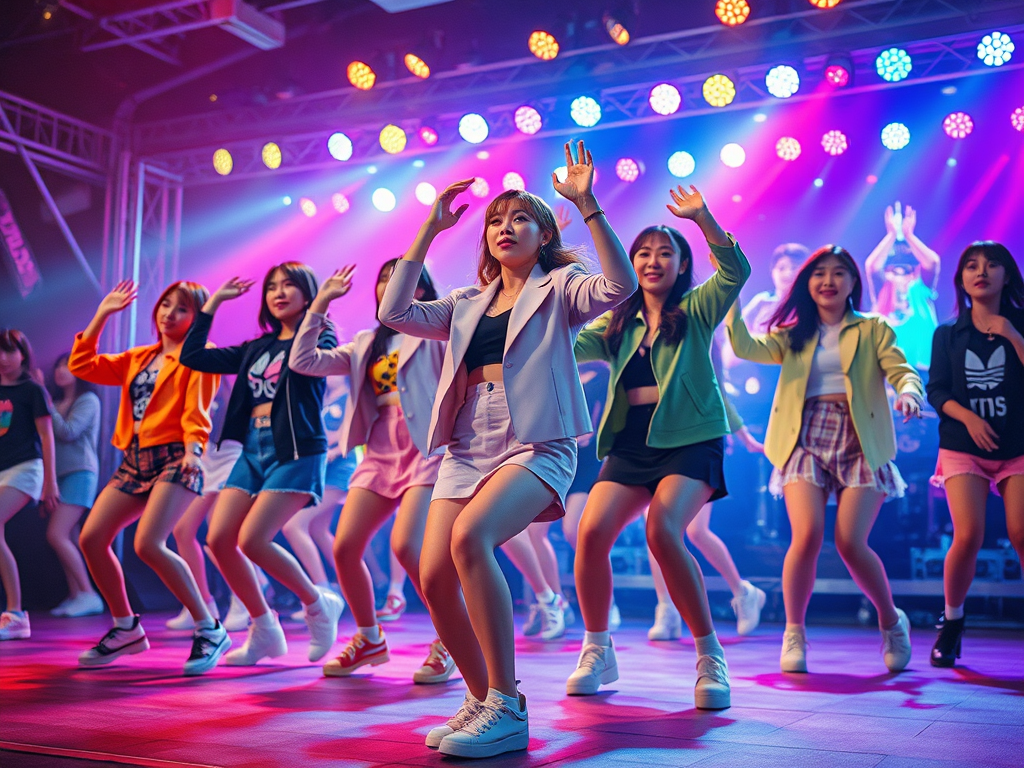
Entertainment: Korean popular cultural exports. One unnamed head of a South Korean talent agency told press that, as a result of these measures, “Chinese TV ads featuring South Korean celebrities were suddenly dropped and new ones aired with Chinese celebrities.” Reporting from late 2017 stated that “K-Pop agency YG Entertainment Inc has not scheduled any concerts in China since July 2016” – leading to a fall in profits of 88% (for July-September 2017). Meanwhile a similar firm, S.M. Entertainment Co, reportedly “has also not scheduled a concert in China since September 2016” – in this case leading to a fall in profits of 61% (for January-June 2017). Additionally, reports claimed that one Chinese company was fined US$14,500 by Beijing for promoting a K-pop act without permission.
While these measures were unsuccessful in reversing Seoul’s policy on THAAD, they do appear to have been successful in placing a check upon any further moves in that direction of travel (i.e. extracting the ‘three no’s commitments). Notably, this incident likely resulted in a major increase of negative perceptions of China among South Korean citizens.
Responses
i) Korean government and industry responses.
Responding to the above financial losses, Korean cultural exports reportedly shifted strategies following these measures to pursue diversification of export markets – with profits rising considerably in the US and Europe in 2020.
South Korea did not back down on the installation of the first THAAD battery in the face of these measures. However, the incoming Moon administration in 2017 quickly moved to establish Seoul’s so-called ‘Three No’s’ policy: no additional THAAD batteries, no joining the US’ missile defense network, and no making a trilateral military alliance with Tokyo and Washington D.C. Then, in December 2017, then South Korean President Moon Jae-in brought an assortment of Korean entertainers with him to a bilateral summit with Chinese President Xi Jinping, with some attending the official state dinner.
(ii) Other states’ government and industry responses
The US was criticised in South Korea for doing little to assist with protecting its ally from these weaponised trade measures.
Status
In October 2017, a bilateral agreement was reached in which both sides agreed to move beyond the dispute. Then, in November 2017, major South Korean entertainer, Jun Ji-hyun, appeared in cosmetics advertisements, in what contemporaneous reporting called a “subtle sign of easing diplomatic tension”. However, parts of these unofficial measures subsequently remained in place.
One further sign of resolution of this case came in November 2022, when the Chinese streaming site Tencent resumed distribution of some South Korean entertainment content. This came shortly after bilateral talks between South Korean President Yoon Suk Yeol and Chinese President Xi Jinping – with the South Korean Presidential office calling the move a “response” to President Yoon’s call for upgraded cultural ties and exchanges. This unwinding of the unofficial ban also followed bilateral talks at the foreign minister level that took place in August 2022.
However, as of 2023 references to continued restrictions on K-pop products remain common.
Reference list
Chandran, N. 2016. “China-Korea feud over THAAD is hurting K-pop in mainland market.” CNBC. November 23. Available at: https://www.cnbc.com/2016/11/23/china-korea-feud-over-thaad-is-hurting-k-pop-in-mainland-market.html
Choi, S.H. 2022. “China resumes streaming South Korean content after six-year suspension.” Reuters. November 22. Available at: https://www.reuters.com/world/asia-pacific/china-resumes-streaming-south-korean-content-after-six-year-suspension-2022-11-22/
Frater, P. 2016. “China Reportedly Bans Korean TV Content, Talent.” Variety. August 4. Available at: https://variety.com/2016/biz/asia/china-confirms-ban-on-korean-content-talent-1201830391/
Kil, S. 2016. “Korean Entertainment Faces Ban in China.” Variety. September 14. Available at: https://variety.com/2016/film/festivals/korean-entertainment-and-k-pop-faces-ban-in-china-1201860530/
Kim, J.H. 2016. “Korean entertainment industry falls victim to Korea-China diplomatic row.” South China Morning Post. November 23. Available at: https://www.scmp.com/ news/china/policies-politics/article/2048551/korean-entertainment-industry-falls-victim-korea-china
Lee, J. and H.K. Yang. 2017. “South Korea celebrity appears in Chinese ad in subtle sign of thawing diplomatic tension.” Reuters. November 13. Available at: https://www. reuters.com/article/lifestyle/south-korea-celebrity-appears-in-chinese-ad-in-subtle-sign-of-thawing-diplomatic-idUSKBN1DD10H/
Muhammad, K. and B. Valeriano. 2024. “When China Banned Korean Boy Bands.” The Diplomat. April 24. Available at: https://thediplomat.com/2024/04/when-china-banned-korean-boy-bands/
Park, B.S. 2017. “South Korea’s “three no’s” announcement key to restoring relations with China.” Hankyoreh. November 2. Available at: https://english.hani.co.kr/ arti/english_edition/e_international/817213.html
Shepherd, C. and J. Lee. 2017. “South Korea’s Moon tries K-Pop and TV stars in China charm offensive.” Reuters. December 2017. Available at: https://www.reuters.com/ article/us-china-southkorea/south-koreas-moon-tries-k-pop-and-tv-stars-in-china-charm-offensive-idUSKBN1E806Y/
Shin, H. 2022. “S.Korea, China foreign ministers discuss N.Korea, K-pop ban.” Reuters. August 10. Available at: https://www.reuters.com/world/asia-pacific/skorea-china-foreign-ministers-discuss-nkorea-k-pop-2022-08-09/
Wang, L. 2023. “The Korean Wave’s Rocky Road in China.” The Diplomat. January 28. Available at: https://thediplomat.com/2023/01/the-korean-waves-rocky-road-in-china/
Xinhua. “China’s Foreign Ministry denies Korean drama ban.” China Daily. November 23. Available at: https://www.chinadaily.com.cn/culture/2016-11/23/content_27470561.htm